The Cultural Legacy of the Fighting Bulls
The Breeding of the Fighting Bull
Embracing Tradition: The Role of Fighting Bulls in Our Heritage.
The Cultural Legacy of the Fighting Bulls
The Breeding of the Fighting Bull
Embracing Tradition: The Role of Fighting Bulls in Our Heritage.
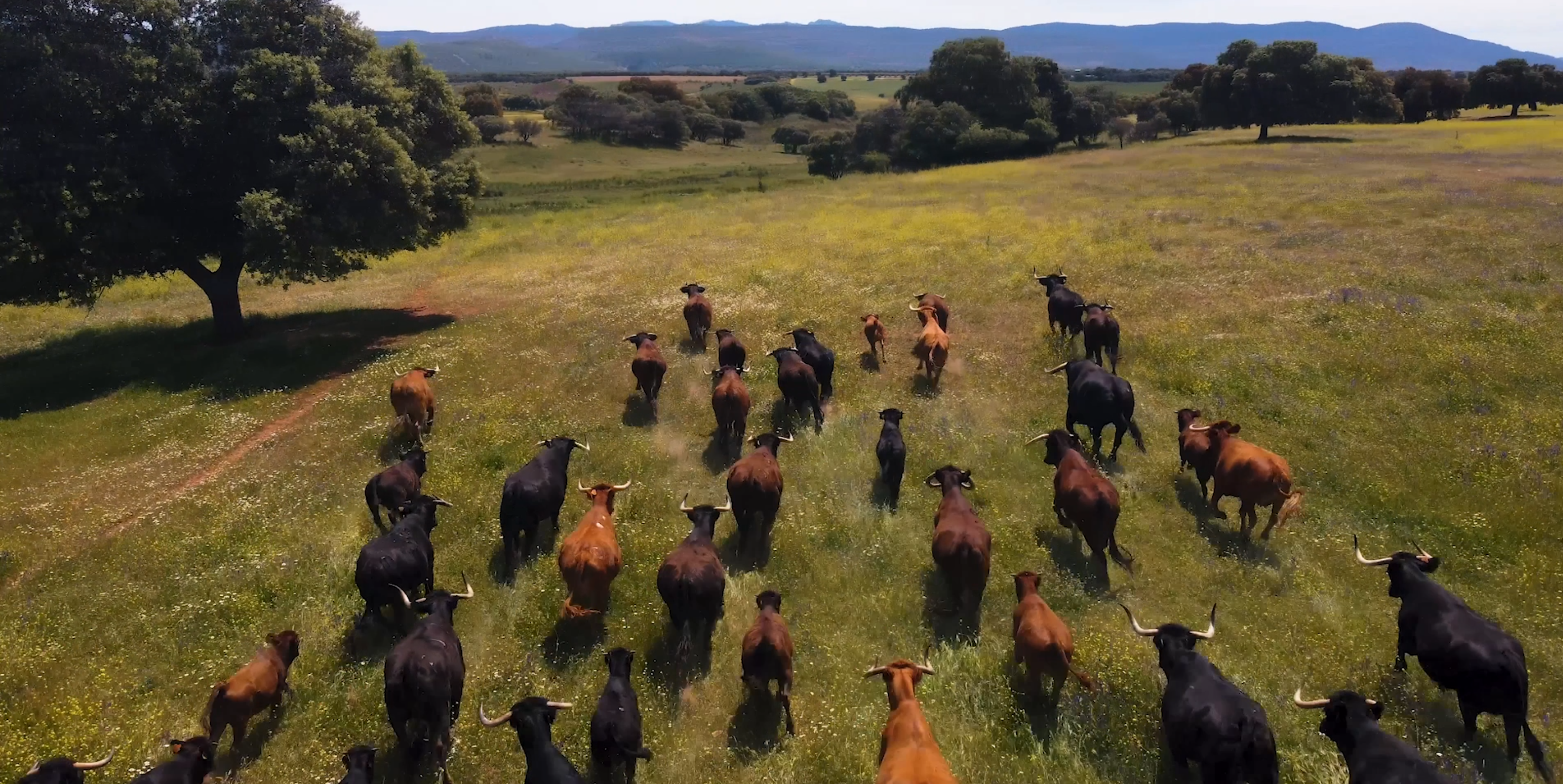
Ganaderías de toros de Lidia
The Samuel Flores breeding farm, of pure Vistahermosa lineage, has the following origin:
In 1882, Don Eduardo Ybarra bought part of the herd from Don Joaquín Murube (from the Vistahermosa bloodline).
It was said of these bulls that they did not have much weight or apparent size; as they endured and suffered from scarcity, they did not fall easily but took many varas (lances) and charged repeatedly. They remained brave and energetic, reached the final stage of the fight (the muleta) in good form, and were straightforward and clear, which made them appealing to both the public and the bullfighters.
They remained in Don Joaquín’s hands for many years, during which he did an outstanding job consolidating the characteristics of the Ybarreño bull type.
In 1903, Don Eduardo Ybarra sold half of the breeding stock to Don Fernando Parladé, who kept it for only a short time and fought only two generations under his name.
Later, a large part of the breeding stock was purchased by the Gamero Cívico family, who divided it into four lots:
Don Ernesto Blanco
His son, Don Manuel Blanco
Don Rafael Clairak from Salamanca
And the Samuel Hermanos lot in Palma del Río (1926)
The Samuel Hermanos branch was the only one that remained within the same family and thus preserved the pure Ybarreño lineage.
Morphology of the Bull
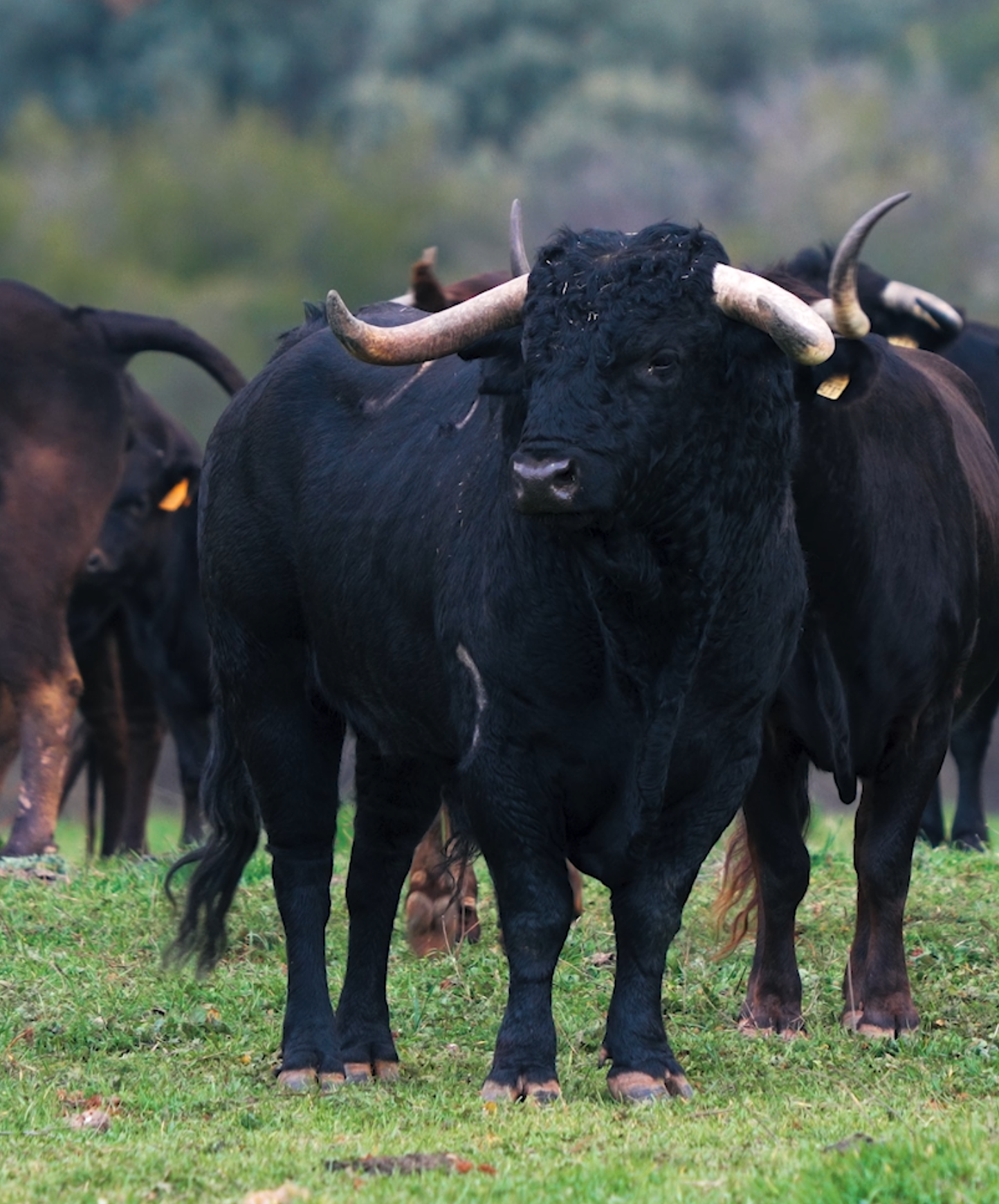
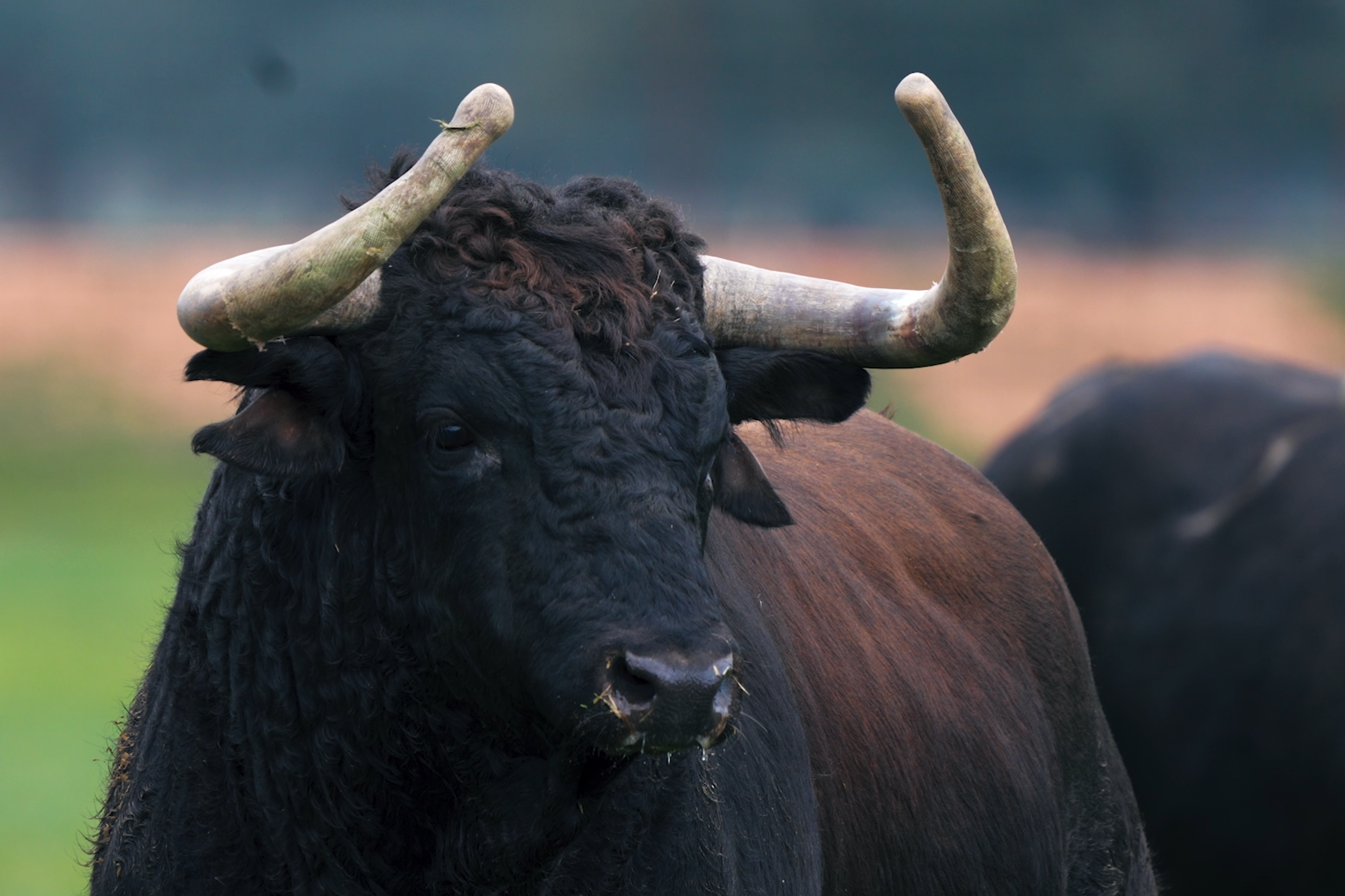
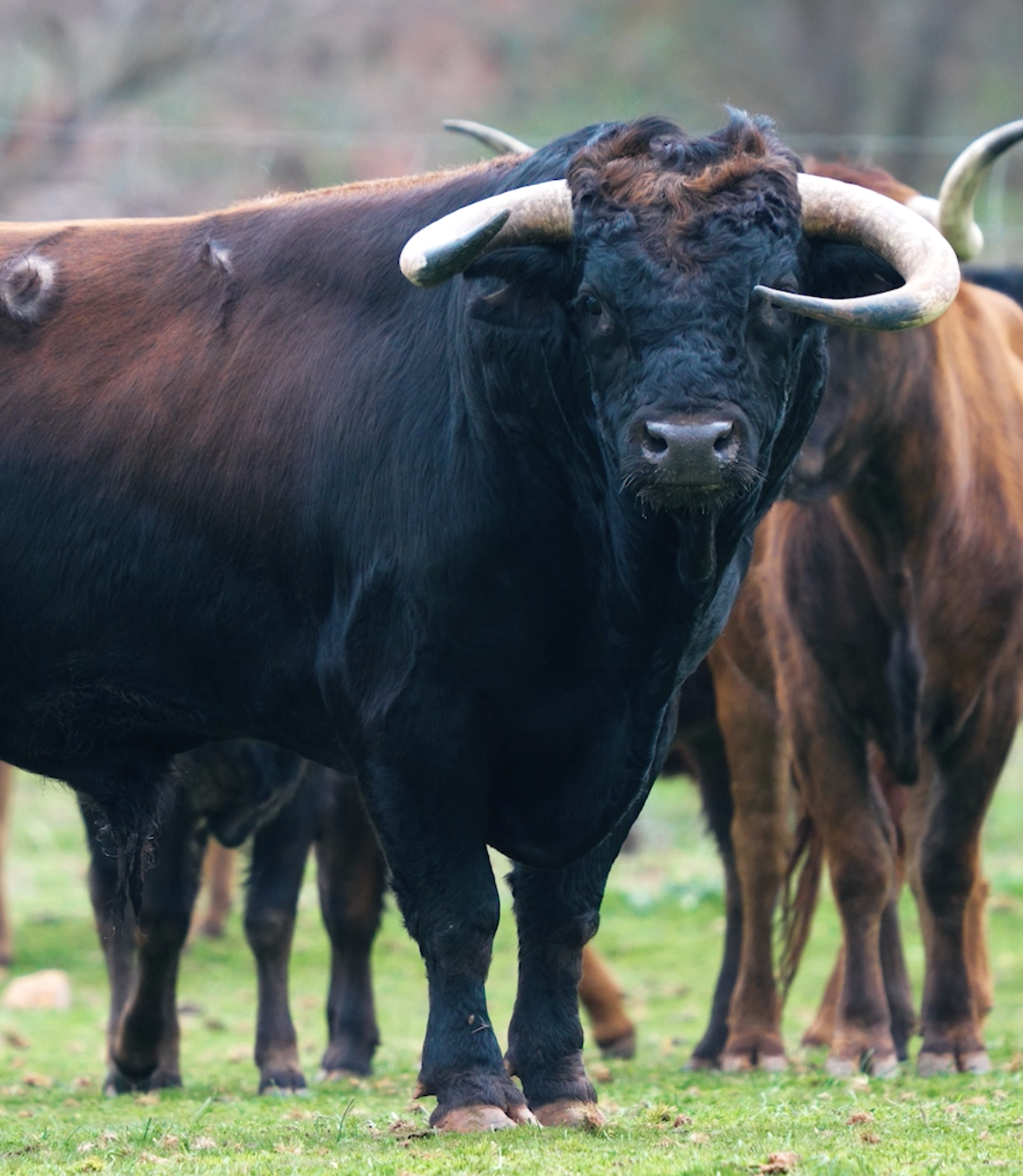
This is a bull with a large skeleton, a prominent face, strong horns that are white at the base, a thick dewlap, wide temples, and a curly forehead (very lion-like), which gives it a commanding presence and an impressive trapío (majestic appearance in the arena).
At the same time, it is short in height, with short forelegs and a long neck, which makes it favorable for the bullfighter.
Above all, its character stands out: its nobility and its ability to grow stronger as the fight progresses.
The Breeding Bull Naviero
When Samuel Flores “the elder” bought the herd, a stud bull named 34 came along with the cows.
It was the following year that he had the luck and wisdom to breed a son from that bull, named Naviero.
This Ybarreño morphological trait was mainly passed down by Naviero, who bred exceptionally well. He also transmitted the typical trait of this bloodline: a split tail base.
This bull made it possible for the breeding farm to reach great splendor from the 1940s through the late 1960s.
Morphology of the Bull
This is a bull with a large skeleton, a prominent face, strong horns that are white at the base, a thick dewlap, wide temples, and a curly forehead (very lion-like), which gives it a commanding presence and an impressive trapío (majestic appearance in the arena).
At the same time, it is short in height, with short forelegs and a long neck, which makes it favorable for the bullfighter.
Above all, its character stands out: its nobility and its ability to grow stronger as the fight progresses.
The Breeding Bull Naviero
When Samuel Flores “the elder” bought the herd, a stud bull named 34 came along with the cows.
It was the following year that he had the luck and wisdom to breed a son from that bull, named Naviero.
This Ybarreño morphological trait was mainly passed down by Naviero, who bred exceptionally well. He also transmitted the typical trait of this bloodline: a split tail base.
This bull made it possible for the breeding farm to reach great splendor from the 1940s through the late 1960s.
BULLFIGHTER WHO TOOK THEIR ALTERNATIVA :
• In 1944, Luis Miguel Dominguín in La Coruña
• In 1963, El Cordobés in the city of Córdoba, cutting both ears and the tail of the bull Berlinés, which was fought sixth
• In 1966, El Viti rose to fame at the Maestranza of Seville with the bull Peina Feas
NOTABLE SUCCESSES OF THE BREEDING FARM
• San Isidro 1990: Bullfight awarded Best of the Fair
• Madrid Beneficencia 1991: Ortega Cano and César Rincón were carried out through the Puerta Grande with 3 ears each, alongside the breeder
• Beneficencia 1992: Enrique Ponce cut both ears of the bull Molino, exited through the Puerta Grande, and established himself as an undisputed figure in bullfighting
• Madrid Fair 1995: Bullfight awarded Best of the Fair
• Madrid Fair 1996: Ponce and Joselito gave a remarkable performance with the capote, performing 6 quites on the bull Cuernos Torpes
• San Isidro 1998: Javier Vázquez triumphed with the bull Piterito
• San Isidro 1999: Vicente Barrera triumphed with the bull Flanón
• Dax 1999: A total of 11 ears and 1 tail awarded
• Bilbao: Awarded for the best bullfight of the year and best bull of the year
• Additional successes in Valencia, Nîmes, Arles, Asprona, among others
BULLFIGHTER WHO TOOK THEIR ALTERNATIVA :
• In 1944, Luis Miguel Dominguín in La Coruña
• In 1963, El Cordobés in the city of Córdoba, cutting both ears and the tail of the bull Berlinés, which was fought sixth
• In 1966, El Viti rose to fame at the Maestranza of Seville with the bull Peina Feas
NOTABLE SUCCESSES OF THE BREEDING FARM
• San Isidro 1990: Bullfight awarded Best of the Fair
• Madrid Beneficencia 1991: Ortega Cano and César Rincón were carried out through the Puerta Grande with 3 ears each, alongside the breeder
• Beneficencia 1992: Enrique Ponce cut both ears of the bull Molino, exited through the Puerta Grande, and established himself as an undisputed figure in bullfighting
• Madrid Fair 1995: Bullfight awarded Best of the Fair
• Madrid Fair 1996: Ponce and Joselito gave a remarkable performance with the capote, performing 6 quites on the bull Cuernos Torpes
• San Isidro 1998: Javier Vázquez triumphed with the bull Piterito
• San Isidro 1999: Vicente Barrera triumphed with the bull Flanón
• Dax 1999: A total of 11 ears and 1 tail awarded
• Bilbao: Awarded for the best bullfight of the year and best bull of the year
• Additional successes in Valencia, Nîmes, Arles, Asprona, among others
ALBACETE FERIA 2007
A highly anticipated return of this breeding farm after 70 years without fighting in its hometown fair, where the breeder Samuel Flores stepped into the ring to kiss the ground after a memorable afternoon.
Discover the Majesty of the Fighting Bulls
Captivating Photo Gallery